
NI RaDCAN
We are delighted to launch the Northern Ireland Rare Disease Clinical & Academic Network. We hope to share research and opportunities among those interested in rare disease research.
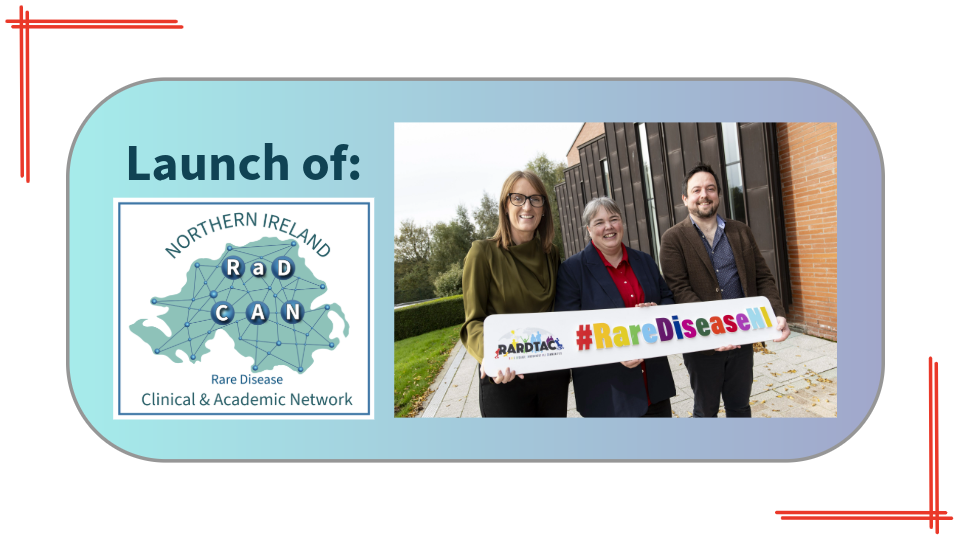
The Rare Disease Clinical and Academic Network (RadCAN), a collaboration between Queen’s University Belfast (QUB), Ulster University (UU) and Health and Social Care Research & Development (HSC R&D), officially launched on 23 October 2025 with a full day of presentations and discussion centred on a shared ambition: connecting people, data and ideas to improve outcomes for those living with rare diseases. Hosted by Professor AJ McKnight at Queen’s University Belfast, the event brought together researchers, healthcare professionals and patient representatives from across Northern Ireland, reflecting the collaborative spirit at the heart of the Network.
Putting People at the Centre
The morning programme focused on Personal and Public Involvement (PPI), led by Dr Alan McMichael (HSC R&D). His session explored what meaningful involvement looks like in practice, research carried out with or by the public, rather than for them, and highlighted the tangible benefits of co-designing studies with patients and carers. Attendees examined practical approaches including advisory groups, steering committees, and the use of plain-English summaries, guided by the UK Standards for Public Involvement and the PIRIT Toolkit for planning and evaluation of PPI activity.
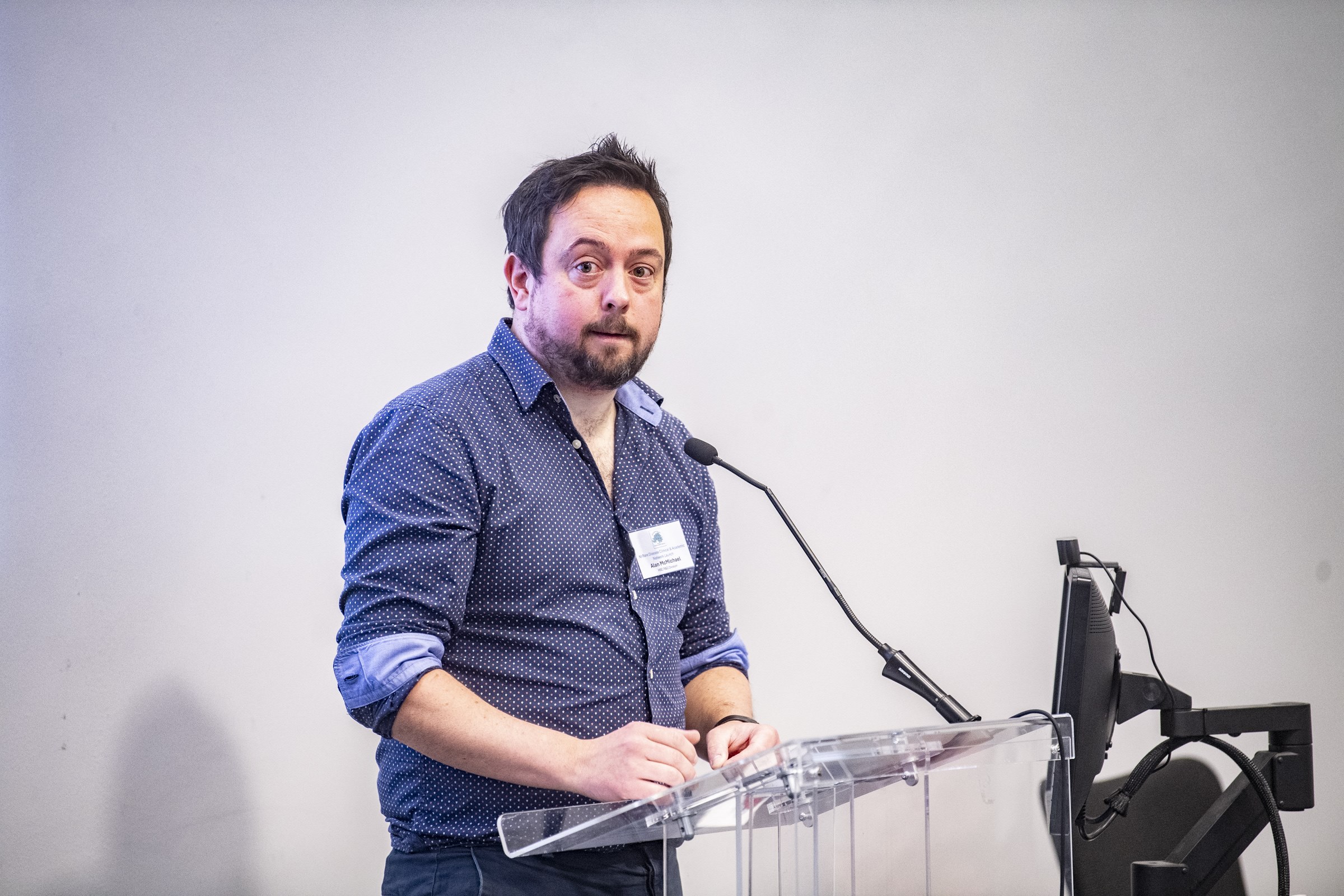
Dr. Alan McMichael
Harnessing Data and Digital Innovation
In the afternoon, attention turned to digital innovation and data integration. Dr Shane McKee (Belfast HSC Trust) demonstrated how EPIC and MyChart are transforming patient engagement by enabling real-time access to health records, test results, and consent processes, key steps toward a more connected rare-disease data infrastructure.
Jon Ross-Reed and Oliver Wyllie of Future Perfect introduced the Panacea Platform, an open EHR-based system designed to support interoperability across registries, including GenOCEANIC, the UK’s first pre-cancer registry.
The session concluded with Prof Michael Quinn and partners from NI-HPC, who outlined how AI- driven analytics and next-generation data architecture could unlock the value of population-level health datasets.
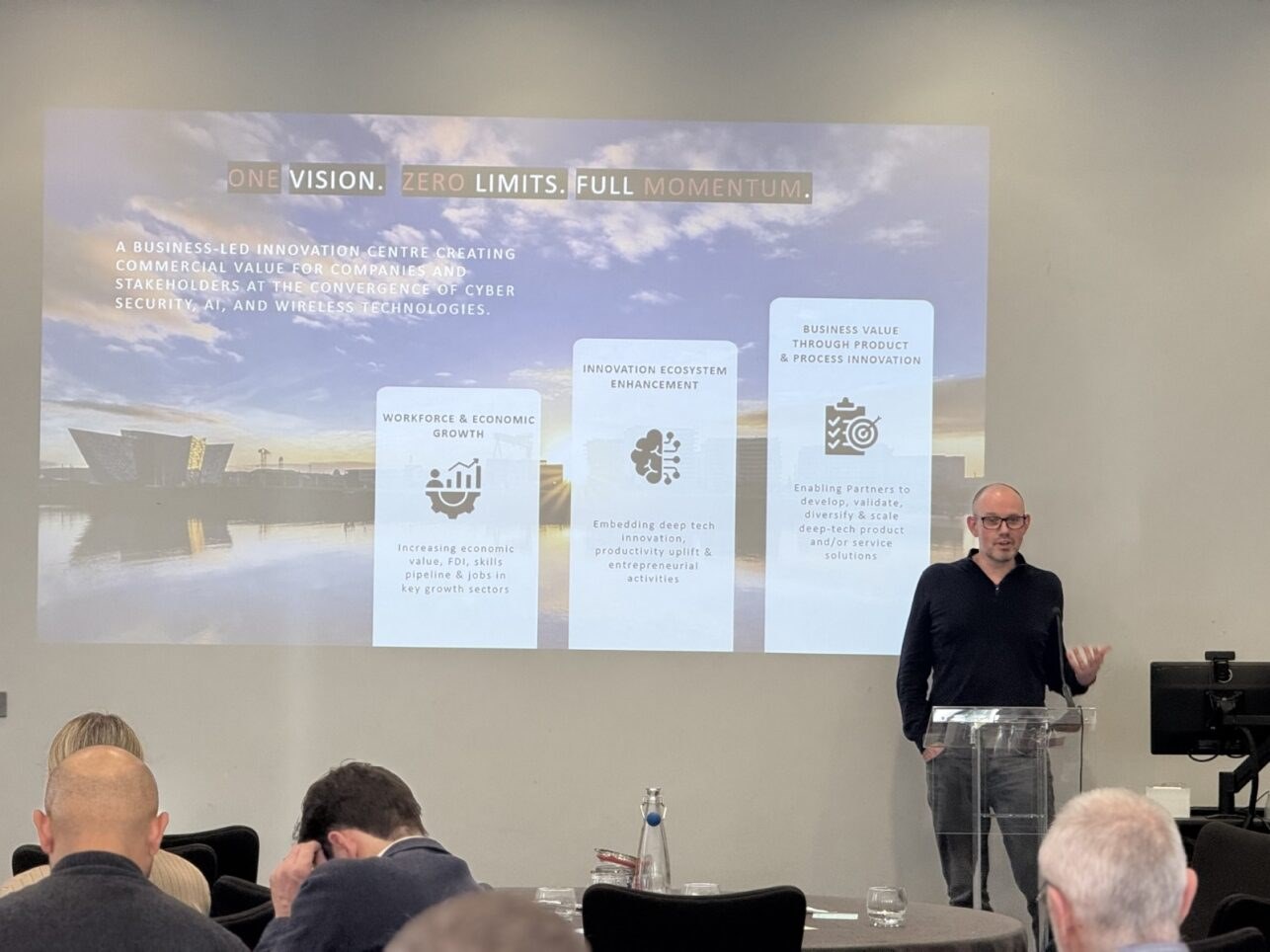
Prof Michael Quinn
A Shared Message
Across panels and roundtable discussions, a consistent message emerged: progress in rare-disease research depends on collaboration, between patients and researchers, across health and digital systems, and beyond institutional boundaries. As one participant remarked, “You can’t 1999 your way out of a 2025 problem.” The RaDCAN Network aims to ensure that rare-disease research in Northern Ireland is equipped to meet that challenge.-1600x1066.jpg) Dr Kerry Longmore (QUB) and Dr Janet Bailie
Dr Kerry Longmore (QUB) and Dr Janet Bailie
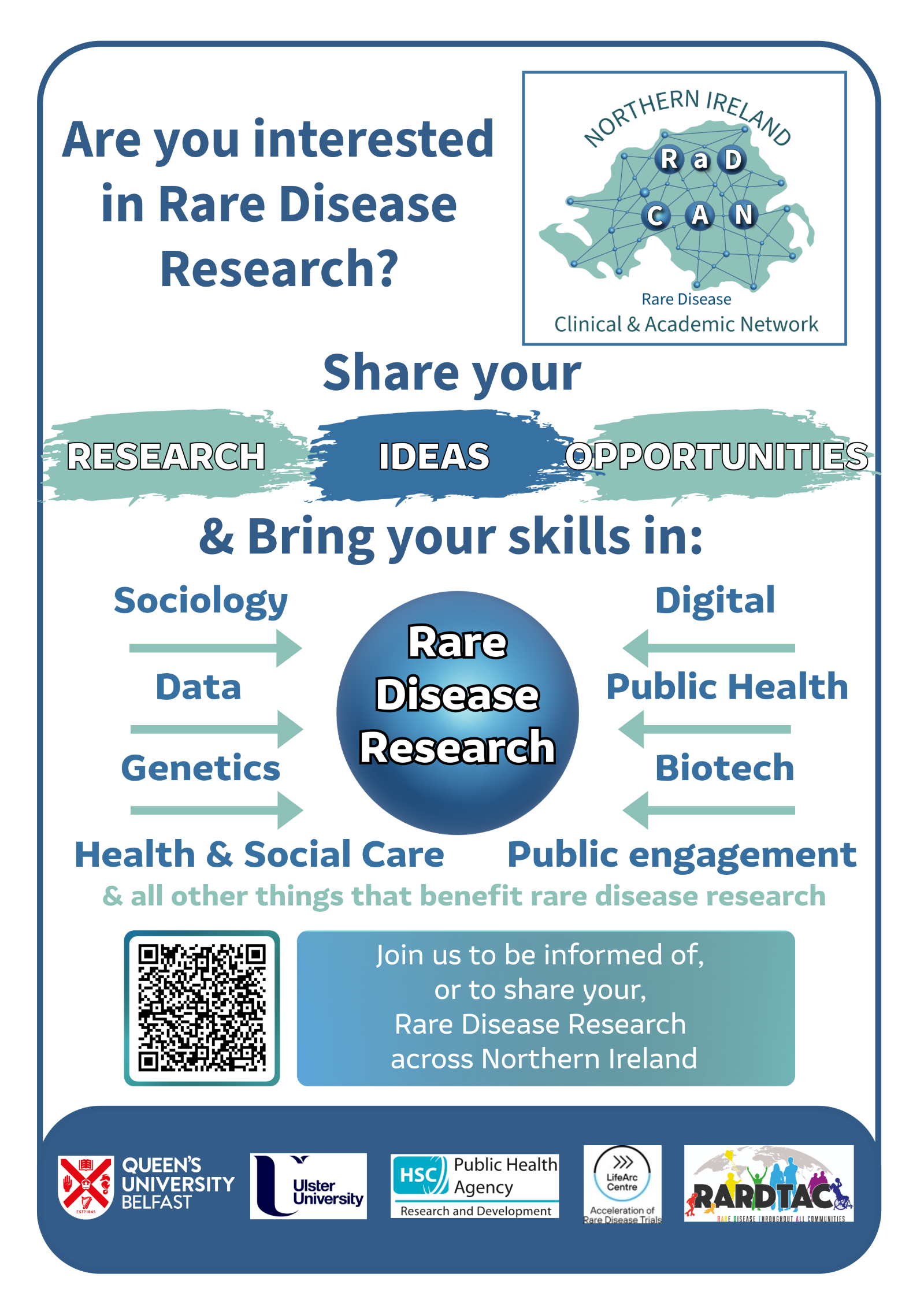
Please register to receive updates and information.
Media
Please do contact our rare disease team by email for further information.